
-
What Is SOS in Morse Code? Meaning, Signal, History, and How to Write It
Posted by on November 18, 2026 at 10:27 amSOS is one of the most recognizable distress signals in the world. It is widely associated with emergencies, rescue operations, and situations where someone needs immediate help. Even people who do not know much about Morse code have probably heard of SOS. However, many people still wonder what SOS actually means, how it is written in Morse code, and why it became such an important international emergency signal. Understanding SOS in Morse code is a simple way to learn more about the history of communication and how people have used signals to ask for help.
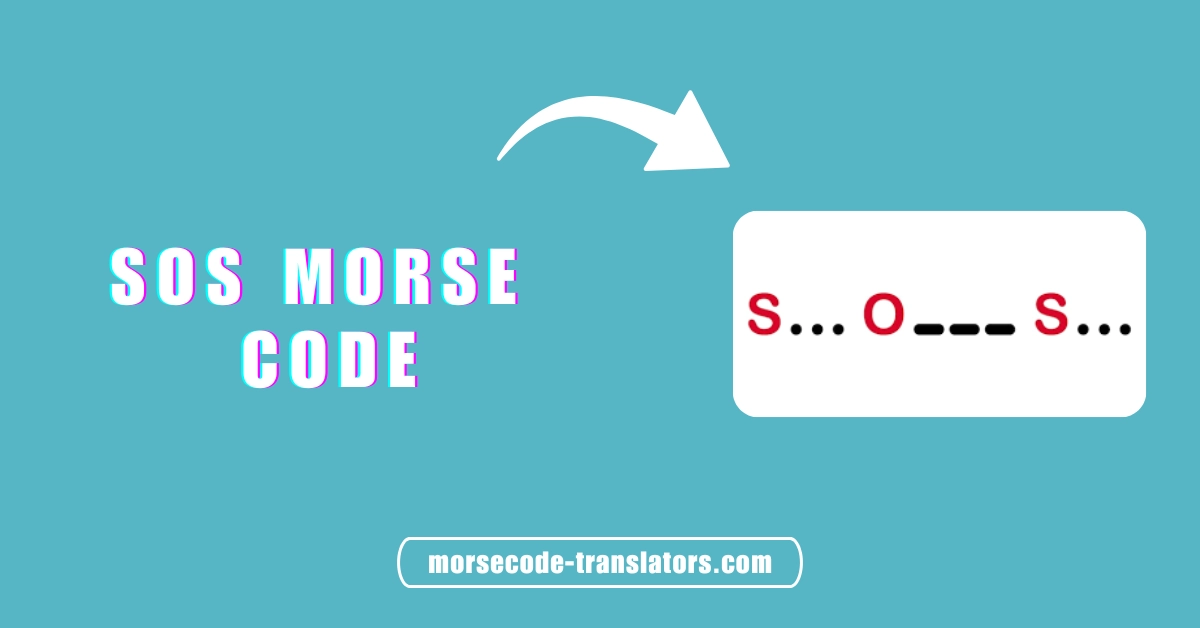
In Morse code, SOS is written as … — …. It consists of three short signals, followed by three long signals, and then three short signals again. The three dots represent the letter S, while the three dashes represent the letter O. When these signals are transmitted correctly, they create a recognizable pattern that can be understood by someone receiving the message. This simple combination has become famous because it is easy to recognize and can be sent through different communication methods, including radio signals, flashing lights, and sound signals.
The most important thing to understand is that SOS was selected as an international distress signal because of its clear and distinctive Morse code pattern. It is not simply a random combination of letters. Its pattern makes it relatively easy to recognize, even when communication conditions are difficult. During an emergency, a clear and recognizable signal can make a significant difference, especially when someone is trying to communicate over a long distance or through limited equipment.
Many people believe that SOS stands for phrases such as Save Our Souls or Save Our Ship. These expressions became popular explanations because they match the emergency meaning of the signal. However, SOS was not originally chosen as an abbreviation for either phrase. It was selected because its Morse code sequence was simple and easy to distinguish. The letters were used as a convenient way to represent the signal, rather than because they had a specific expanded meaning.
The history of SOS goes back to the early days of wireless communication. Before modern communication systems became common, ships often depended on radio operators to exchange important messages across the sea. When a vessel experienced serious trouble, it needed a reliable way to inform nearby ships and coastal stations that immediate assistance was required. A standard distress signal helped radio operators understand emergencies without confusion. SOS became internationally recognized in the early twentieth century and was officially adopted for maritime distress communication in 1906.
One reason SOS became so popular was its simple structure. Morse code uses dots and dashes to represent letters, numbers, and other symbols. A dot is a short signal, while a dash is a longer signal. The SOS pattern combines these elements in a memorable sequence. Since the pattern begins and ends with three dots and contains three dashes in the middle, it is easy to remember. People can also send it using different methods, which makes it useful in situations where traditional communication equipment is unavailable.
Learning how to write SOS in Morse code is quite easy. The letter S is represented by three dots, while the letter O is represented by three dashes. When these letters are placed together, the complete SOS signal becomes three dots, three dashes, and three dots. Written in its standard form, it looks like this: … — … . Anyone learning Morse code can practice this pattern by listening to its rhythm or creating the signals manually. Repeating the pattern several times can help beginners remember it more easily.
There are different ways to communicate SOS in an emergency. One traditional method is using a radio transmitter to send the Morse code signal. Another method involves using a flashlight or another visible light source. A person can flash the light three times quickly, keep it on for three longer periods, and then flash it three times quickly again. Sound signals can also be used by creating three short sounds, three long sounds, and three short sounds. The important part is maintaining a recognizable pattern so that another person can understand the message.
SOS is especially interesting because it does not depend on spoken language. People who speak different languages can recognize the same Morse code distress pattern. This makes it a useful example of how communication can work across language barriers. Morse code was originally developed for transmitting information over telegraph systems, but it later became important in maritime communication, military operations, aviation-related applications, and amateur radio activities. Although modern technology has changed the way people communicate, Morse code remains an important part of communication history.
For beginners, practicing SOS can be a good starting point for learning the Morse code alphabet. Instead of trying to memorize every letter at once, learners can begin with a few simple patterns. The letter E is represented by one dot, while T is represented by one dash. The letter S uses three dots, and O uses three dashes. Once these basic signals become familiar, learners can gradually move on to other letters and numbers. This approach makes learning Morse code easier and more enjoyable.
A Morse code translator can also help people understand how SOS works. Instead of manually remembering every dot and dash, beginners can enter the letters SOS into a translator and see the corresponding Morse code pattern. Some online tools also allow users to convert ordinary text into Morse code and translate Morse code back into readable text. These tools are useful for checking whether a signal has been written correctly and for practicing different combinations. Listening to the audio version can make the learning process even more effective because users can understand the difference between short and long signals.
Another interesting fact about SOS is that the signal became famous through stories of maritime emergencies. One of the best-known historical examples is the sinking of the Titanic in 1912. During the disaster, wireless operators transmitted distress messages, including the SOS signal, to request assistance from nearby ships. This event helped bring worldwide attention to the importance of reliable emergency communication. Although SOS had already been adopted before the Titanic disaster, the incident became an important part of its history.
Today, SOS is still widely recognized as a symbol of distress, even though modern emergency communication systems have replaced Morse code in many situations. Ships, aircraft, mobile phones, and other communication devices use advanced technologies to request help. Emergency services can receive location information and other important details through modern systems. However, SOS remains a familiar symbol that represents the need for urgent assistance. Its simplicity and historical importance have helped it remain relevant for more than a century.
It is also important to understand the correct use of SOS. It is intended for serious emergency situations, not ordinary conversations or jokes. Sending a false distress signal can create confusion and may cause emergency responders or other people to waste valuable time. Anyone learning Morse code should understand the difference between practicing a signal and using it to communicate a genuine emergency. In a real-life dangerous situation, people should use the appropriate local emergency services and available communication systems whenever possible.
For students, hobbyists, and anyone interested in communication technology, SOS provides an interesting introduction to Morse code. It demonstrates how a small combination of dots and dashes can carry an important message. Learning this signal also helps people understand the value of standard communication patterns. A signal that is easy to remember and recognize can be especially useful when people are under pressure or working with limited resources.
In conclusion, What Is SOS in Morse Code is written as … — …, using three dots, three dashes, and three dots. It is internationally recognized as a distress signal and has played an important role in communication history, particularly in maritime emergencies. Although people often connect SOS with phrases such as Save Our Souls and Save Our Ship, the signal was originally selected because its Morse code pattern was simple and distinctive. Today, modern communication technology provides many advanced ways to request assistance, but SOS remains one of the most recognizable emergency signals in the world. Learning its meaning, pattern, and history is a useful first step for anyone interested in Morse code and the fascinating development of human communication.
morsecode-translators.com
SOS In Morse Code: Exact Pattern, Sound & Signal Guide
Learn the universal SOS Morse code pattern (... --- ...). Master how to send this essential distress signal using light, sound, or tapping in any emergency.
Sorry, there were no replies found.
Log in to reply.