
Custom Prompt Tracking, and 9 Other New Ahrefs Features I Love

It’s been four months since I joined Ahrefs, and in that time I’ve watched the team ship dozens of product updates. 85 to be precise.
Even though I’ve been an Ahrefs customer for more than ten years, I never realized quite how often new features are added to the platform.
Now that I (proudly) work at the company after Ahrefs acquired Detailed, one of my jobs is to track updates and see if I can offer suggestions for improvement, or ideas on how Ahrefs customers can get more out of it.
As I’ve overseen so many changes, it’s probably time I shared some of my favourites.
I wasn’t asked to write this. I just know there’s a lot of overlap between Detailed readers and Ahrefs customers, so hopefully I get to introduce you to something you missed.
It wasn’t easy to pick just ten so I’ve cheated slightly in combining a couple of related updates, but not too many.
1. Find backlink opportunities and filter competitor rankings by Page Type and Category
Ahrefs gained its reputation, in part, for having the best backlink index on the web. That backlink data is constantly being made more accessible.
Page types and categories now show up by default on Backlink reports and SERP overviews, and can also be used as filters:
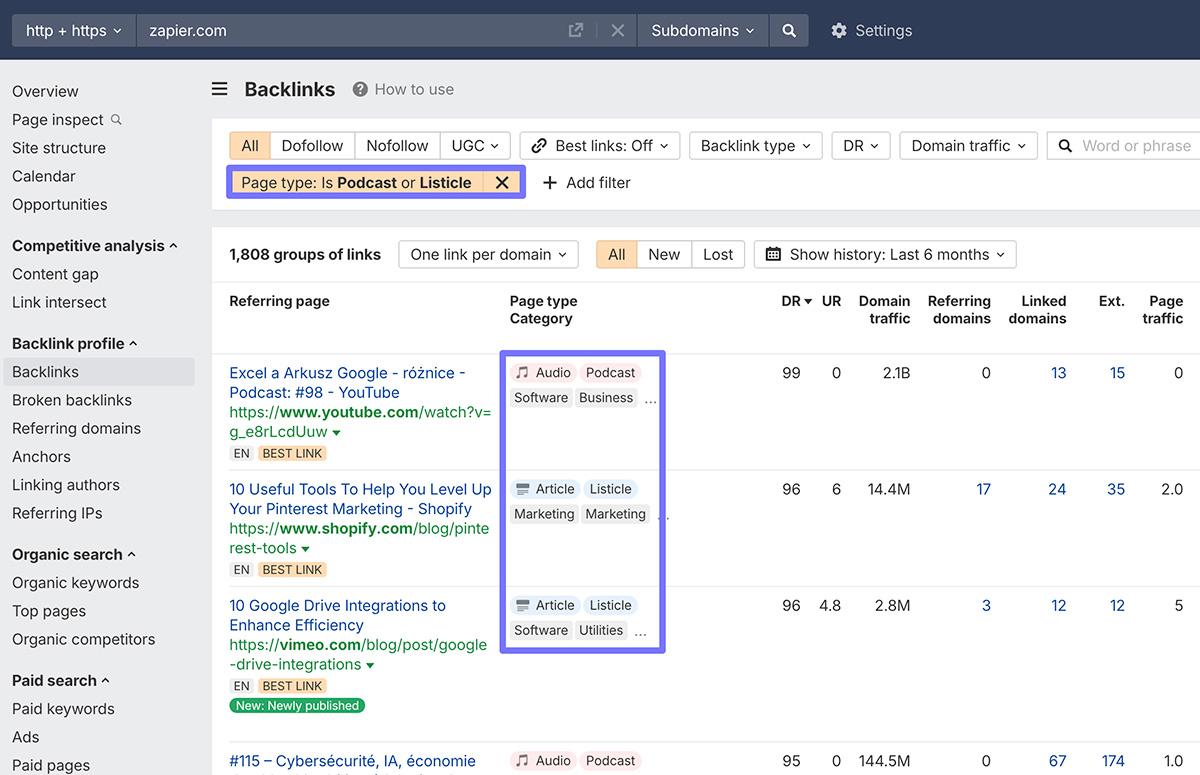
It’s now incredibly easy to see all the podcast mentions a site has picked up, or all the times they were included in a “Best” listicle post.
If you haven’t already, you might be able to get a mention on those same sources.
Filtering by categories means you can also find the most relevant (and not-so-relevant) links any of your competitors have picked up. The former would be a good place to start with any relationship building efforts.
2. Keyword research goes global, making it much easier to target popular terms in other languages
Ahrefs Keyword Explorer has always shown traffic opportunities for non-English terms, but it has never been easy to focus on (or exclude) any specific language.
That changed recently with the launch of language filters, enabling you to separate keyword suggestions for table tennis (English) and tennis de table (French).
Football is more my sport…
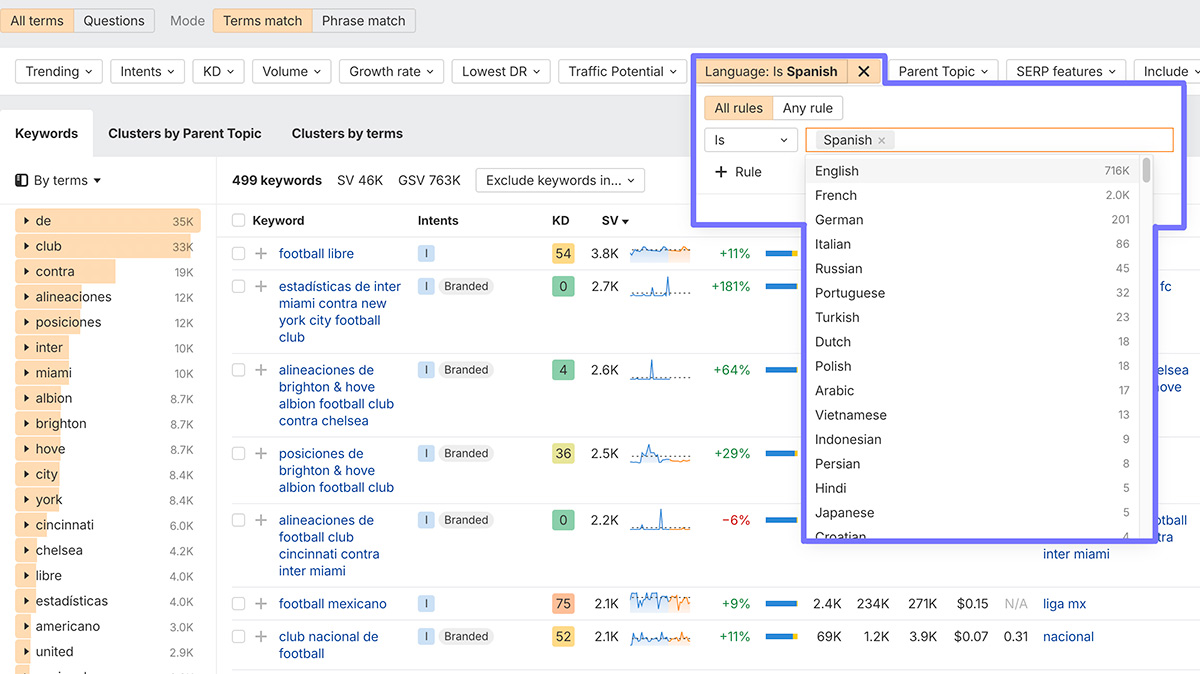
This makes Ahrefs even more valuable for your content team which already writes for different markets, or to aid in international expansion plans.
3. Tracking AI visibility with custom prompts is finally here
The last 18 months have seen literally dozens of AI visibility platforms launch, many of which have raised millions in funding.
Ahrefs first launched Brand Radar to help you track visibility across hundreds of millions of queries.
While Brand Radar has been a huge success — and is easily Ahrefs’ fastest-growing product — we heard a lot of feedback from people who would like to track their own terms, at specific intervals.
Custom prompt tracking allows daily, weekly, or monthly monitoring of responses in ChatGPT, Gemini, Perplexity, and Microsoft Copilot.
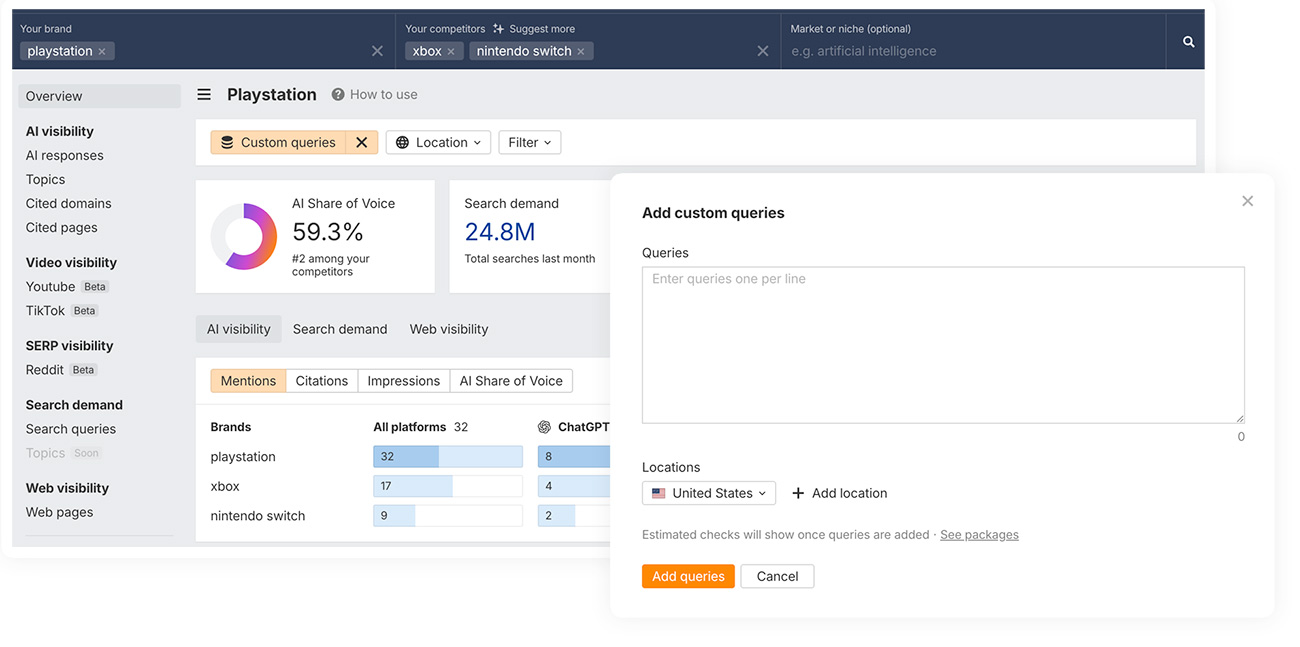
With a Brand Radar all indexes plan you already get access to 2,500 monthly checks, but for just $50/m you can get an additional 2,500 checks on top of that.
To put the pricing into perspective, if you were only monitoring ChatGPT responses in the US, you could analyze 620 prompt responses every single week.
If you wanted daily monitoring, you could track about 80 prompts. More than enough to get an idea of which answers you’re showing up for.
4. Monitor mentions on YouTube, Reddit, and TikTok with new Brand Radar indexes
Ever wondered how to track when your brand is mentioned on YouTube, at scale?
Or how about whether the things people are saying about you on Reddit, before they even need to click through from search results, are positive?
With our three new indexes in Brand Radar, available to all Ahrefs customers (even without a separate Brand Radar plan), you can now get those insights.
Of course, one of the first things I had to go and check was people talking about the Detailed SEO Extension:
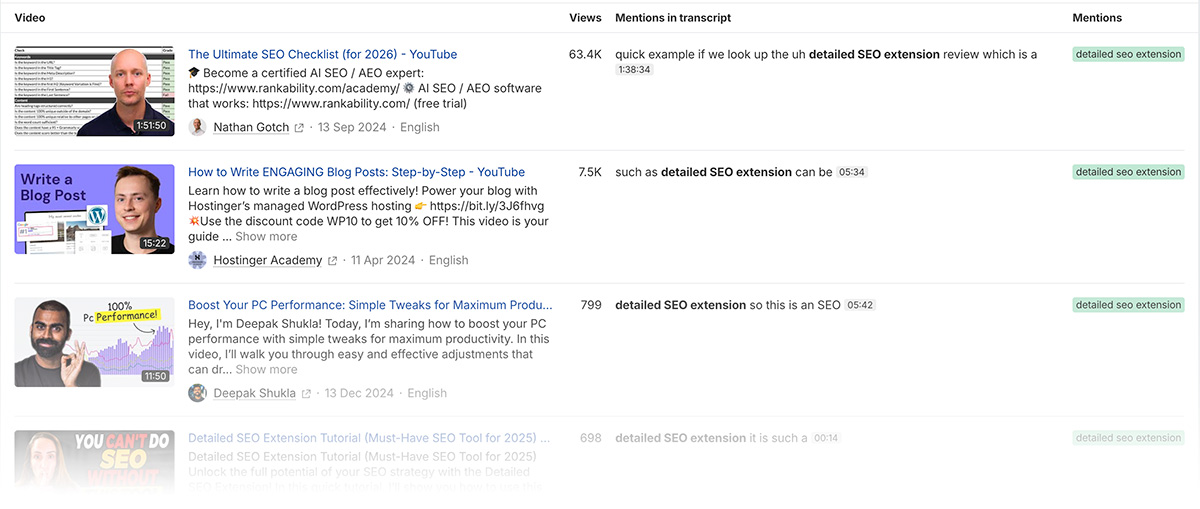
I’m biased, but I love that results include the timestamp of any mention so that you can hear the context for yourself.
5. Find who’s getting the most links from top competitors thanks to backlink presets
In Ahrefs ‘Backlinks report’ in Site Explorer, there are 27 different filters you can apply to help analyze the link landscape of competitor sites.
Countless Ahrefs customers have tweaked these filters to perfectly match their needs, but it can be a hassle to save them as bookmarks, or manually tweak them every time you’re doing research.
With Presets, you can now save as many groups of custom filters as you like, to quickly access at any time.
If you want to find when when all the food blogs you’re competing with pick up new links inside actual recipes, you can save a Preset for that:
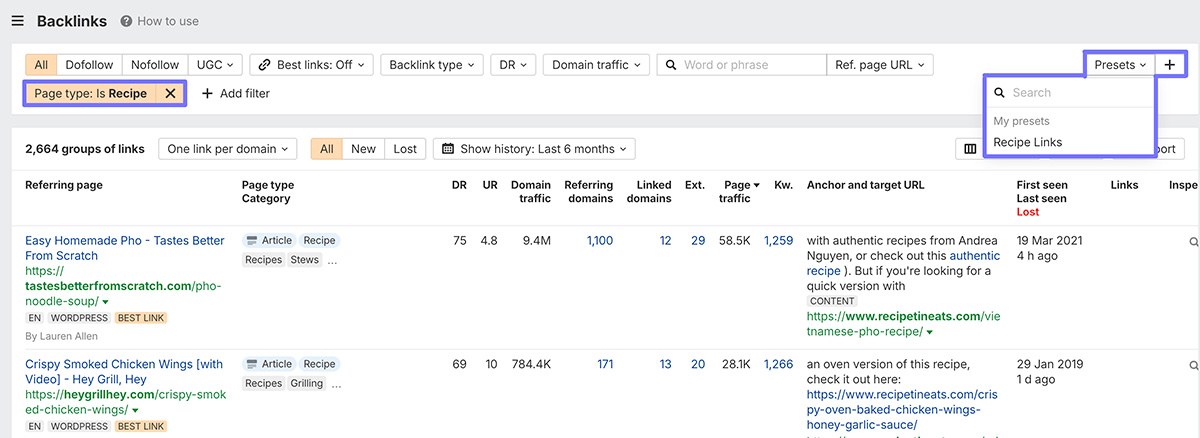
Some other angles you could track include:
- Only checking followed, in-content links from sites with a minimum DR of 30
- Only checking links from domains with at least 10,000 monthly visitors
- Instantly see all sponsored links pointing to a site.
Whatever you’re working on, just click on the relevant preset for your task.
6. AI query responses have been redesigned to better highlight brand mentions and citations
Our AI response data always showed whether your own or competitor brands were mentioned in responses, but weren’t as easy to parse visually as they could be.
Thanks to some great work by the frontend team, it’s much easier to see brand mentions, citations, and the structure of responses.
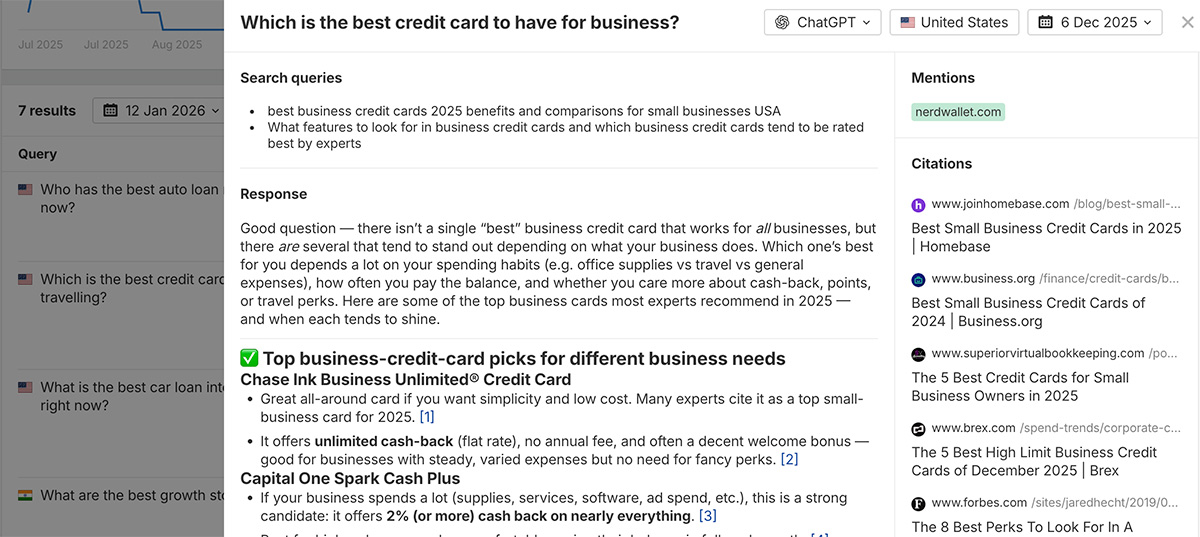
The team also started using favicons to highlight who is featured — a small touch, sure, but it makes quickly scanning through results that much easier.
7. View your top-performing subfolders in Google Search Console with the Site Structure report
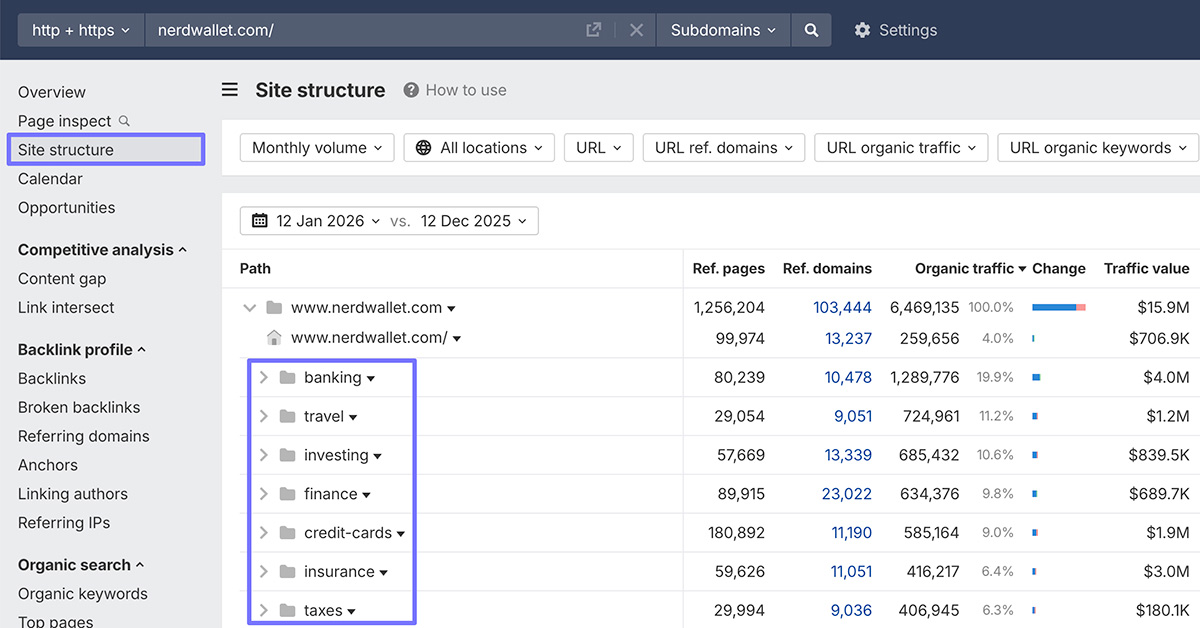
One of my favourite reports in Ahrefs Site Explorer is the ability to see the top-performing subfolders on any domain.
You can find this under the ‘Site structure’ menu item, and even use it to drill down for specific subdomains:
For any sites where you sync Google Search Console data with Ahrefs, you can now get a similar layout using your actual click data, like so:
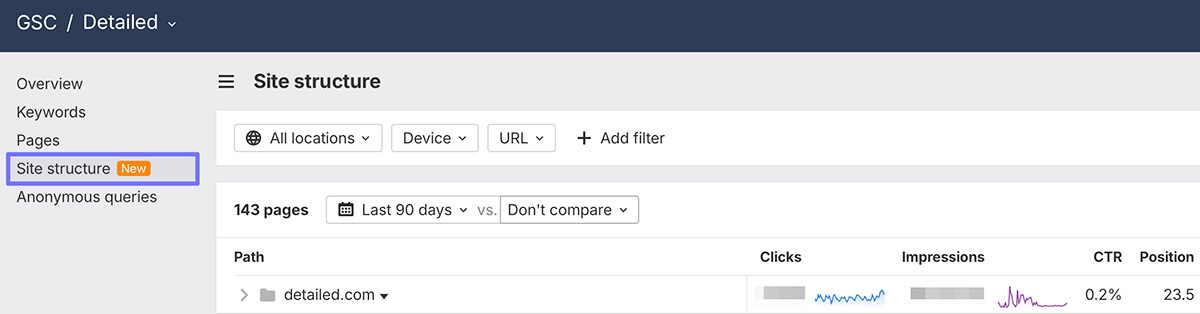
Google Search Console is a great tool, but it’s nice to take its functionality to the next level with the Ahrefs integration.
8. New ‘Patches’ functionality lets you fix more website issues without touching any code
At the start of 2025, Ahrefs launched Patches, a no-code solution that lets anyone easily edit title tags and meta descriptions on their websites directly from the Ahrefs dashboard.
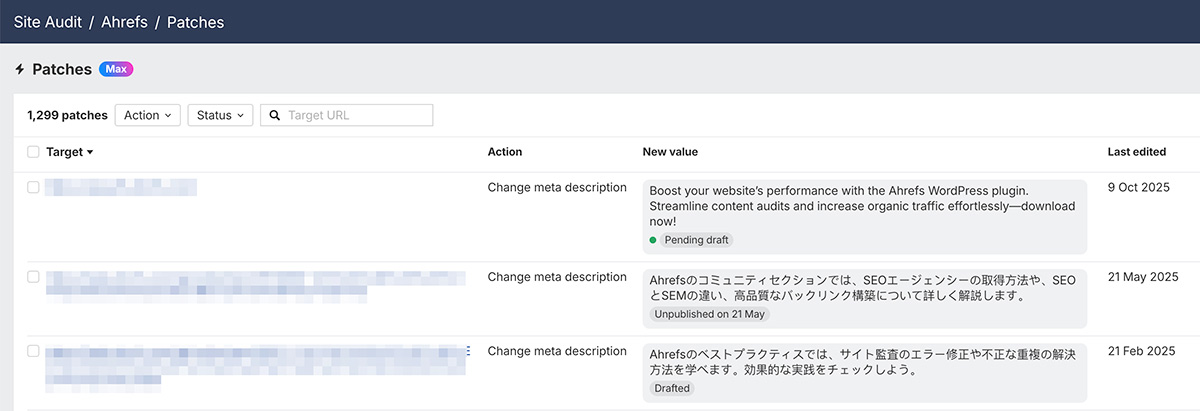
Patches has recently had some great new additions, allowing you to:
- Change the canonical URLs of any page
- Add new redirects (or update existing ones)
- Add or remove noindex tags
- Update internal links across your site
Some of these features will require Cloudflare, which is the world’s most popular CDN with around 70% market share.
Others, like updating internal links, simply require a JavaScript snippet embedded on your site.
9. Our Social Media Manager tool launched, and it’s free for all accounts
While Ahrefs is primarily known as an SEO platform, it offers additional functionality to help with other aspects of marketing, like website analytics, paid search insights, and tools to assist with content creation.
The new Social Media Manager tool lets you post to all leading platforms, including LinkedIn, Instagram, X, and Facebook, from a single location.
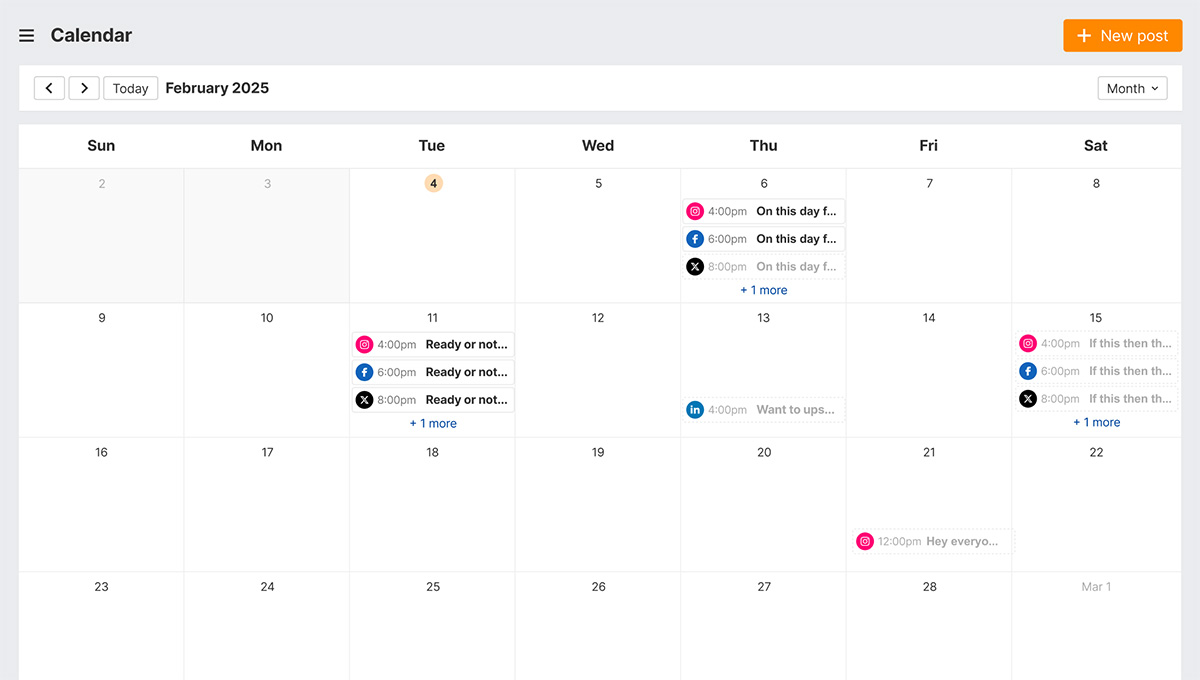
Write a post once and have it instantly publish to multiple accounts, or schedule it for a more convenient time.
AI suggestions help you tailor your messaging as you’re writing, and new updates include being able to see all post analytics from the past — even if you didn’t publish those posts inside Ahrefs.
10. Easily analyze traffic spikes and falls by Entities and Intent
For any domain, you can now see the most common entities they’re picking up search traffic for, and visualize traffic by intent (like Information, Local & Branded).
For each entity, you can see the raw traffic numbers and how many rankings make those up.
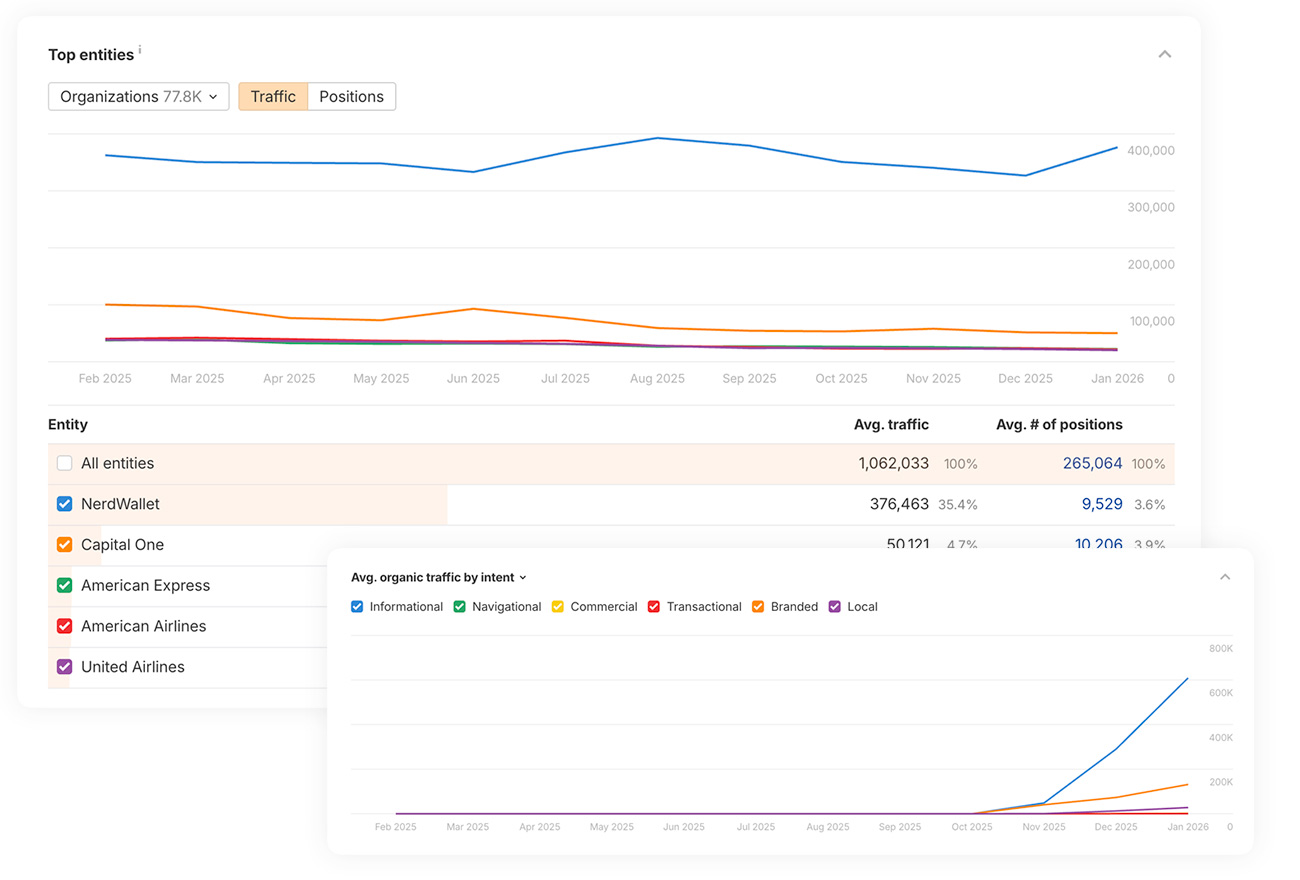
For intent charts, simply hover over any part of the graph, and you can see them broken out by numbers.
If a site has had any significant traffic swings, you can quickly see if the overall domain has risen (or fallen) in Google’s rankings, or if any specific queries have had the most impact.
There’s lots more on the way in 2026 (including a personal update on my work at Ahrefs)
As I mentioned in the introduction, I wasn’t asked to write this, but felt like I should share some of what I’ve been focused on over the past few months.
I’ve always been open about what I’m working on, and that definitely changed in a drastic way since joining Ahrefs.
The support I’ve received since making the announcement has been incredible, and while I like to think I’m contributing a lot, I’m also learning a ton in the process.
I’m going to write a full update on all the insights I’ve had since making the career switch, but it’s fair to say I’m really happy with how things are going.
One of my favourite perks is definitely getting to see all of the upcoming features in advance.
If the above is just part of what happened in the four months since I joined, you can be sure there are some huge features planned for 2026.
Finally, if you’re on LinkedIn, I’m much more active there than I used to be, and I would love to connect.
I’m also sharing ideas and things I’m working on over at X and Facebook.