
-
End‑to‑End Testing — Ensuring User‑Level Reliability
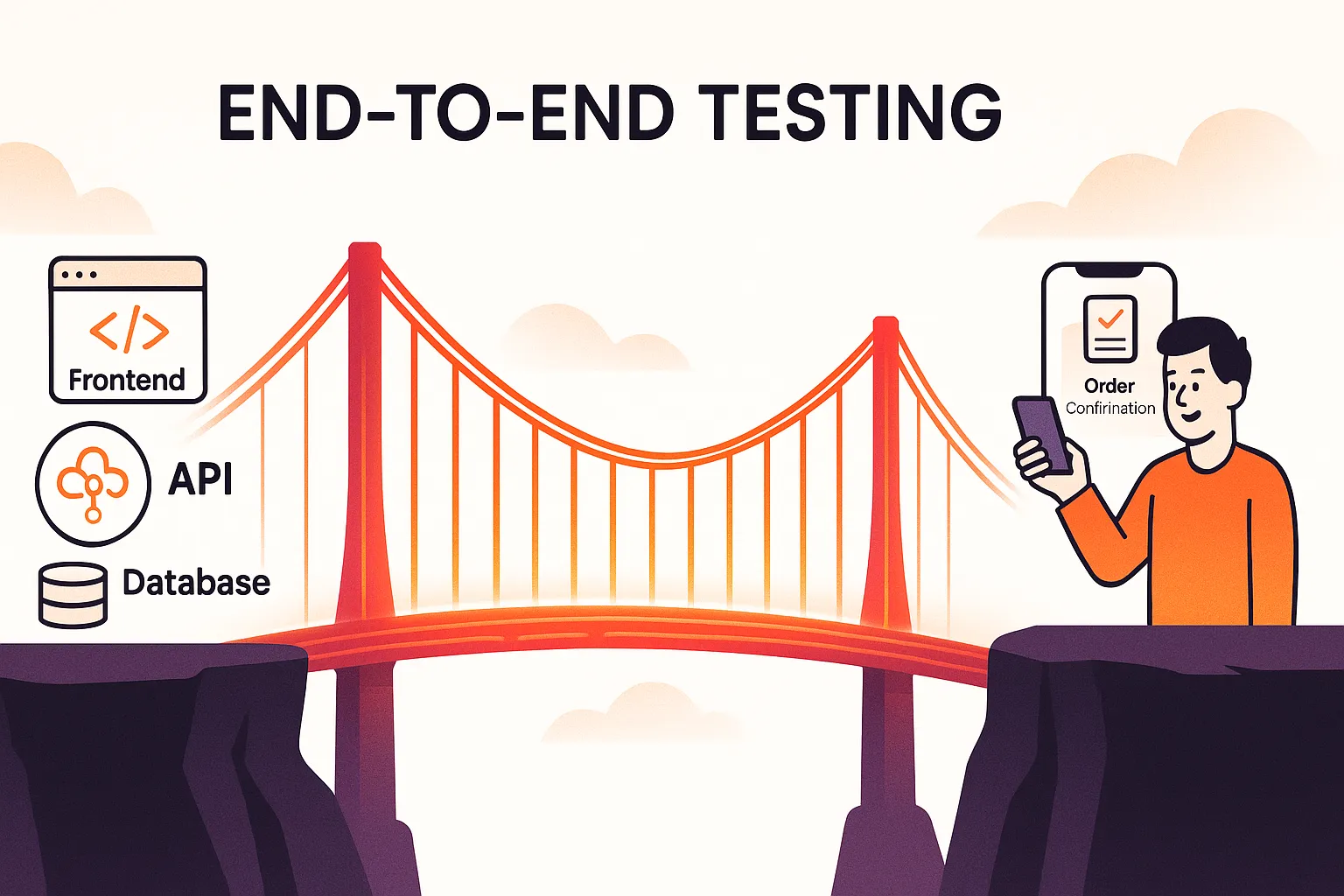
Posted by on December 12, 2025 at 1:16 pmEnd‑to‑end testing verifies full workflows exactly as a real user would experience them — from UI to backend services and databases — within a production‑like environment. Unlike unit or integration testing, E2E tests validate entire user journeys rather than specific connections between layers.
Take a keyword research tool as an example:
-
A user logs in via the UI.
-
They input a keyword and click “Analyze”.
-
The frontend sends the request to the backend API.
-
The backend fetches keyword metrics from stored datasets and third‑party APIs.
-
Results are displayed back in the UI.
An E2E test would automate this full flow — opening the interface, entering the query, submitting it, and validating the visible output. It checks all components: the UI framework, REST API, caching layer, database, third‑party API responses, and even session handling.
By covering real user journeys, E2E testing catches issues that other test layers miss. Broken routes, missing UI elements, API timeouts, or display errors surface here. While more resource‑intensive, E2E tests help teams catch regressions in critical user flows before they reach production, greatly improving software reliability.
keploy.io
End-to-End Testing: Complete Guide for QA
Explore end-to-end testing, a software testing approach that validates an application’s complete workflow from start to finish using real-world user scenarios.
-
Sorry, there were no replies found.
Log in to reply.