
-
AI for Coding: A Game-Changer or a Fad?
Posted by on December 12, 2025 at 1:20 pmAs artificial intelligence (AI) becomes more integrated into everyday technology, one area where it’s making significant strides is software development. AI for coding is a hot topic, with tools like GitHub Copilot, Tabnine, and others revolutionizing how developers write code. But with all the buzz surrounding AI’s capabilities, it’s important to ask: <em style=”font-family: inherit; font-size: inherit;”>Is AI for coding genuinely a game-changer, or just a passing trend?
The Rise of AI in the Development Process
In recent years, AI for coding has transitioned from theoretical discussions to practical tools integrated into mainstream development environments. Tools like GitHub Copilot use large language models (LLMs) to predict code, suggest improvements, and even write entire functions or scripts from natural language descriptions. Developers no longer need to manually write every line of code—AI can handle the repetitive and boilerplate aspects, freeing up time for more creative problem-solving.
Example: AI-Assisted Code Generation
For example, imagine you’re building an API to fetch user data from a database. With AI for coding, you can provide a simple prompt like, “Create a REST API endpoint to fetch user details from the database.” The AI tool will generate the code, ensuring correct syntax and structure, which saves you time and effort on mundane tasks.
Advantages: Why AI for Coding is Gaining Traction
-
Faster Development: By automating the mundane aspects of coding, AI tools speed up development, allowing developers to focus on higher-level tasks. Code suggestions, auto-completion, and even complex algorithm implementations can be done in seconds.
-
Reduced Cognitive Load: Developers often struggle with syntax, patterns, and remembering libraries or methods. AI tools reduce this mental load by offering instant code suggestions, syntax corrections, and providing context-sensitive solutions.
-
Code Quality Improvement: AI tools are trained on vast datasets of high-quality code, which means they can offer suggestions based on best practices, industry standards, and optimal code patterns. This can lead to better code quality and fewer errors.
-
Increased Accessibility: AI-powered tools democratize coding by making it easier for beginners and non-programmers to understand and write functional code. It lowers the barrier to entry for people with less experience but a willingness to learn.
Example: Real-Time Code Fixing
Another feature is the AI’s ability to catch bugs and errors before they even happen. If you miss a semicolon or use a variable incorrectly, AI tools can catch this in real time and suggest fixes—much like a sophisticated linter but more intelligent.
Challenges: Is AI Really Ready for Prime Time?
While AI for coding offers numerous benefits, there are still some significant challenges and concerns surrounding its widespread use.
-
Quality Control: While AI tools are often accurate, they can sometimes generate code that is inefficient, insecure, or not well-suited to a specific use case. Developers still need to ensure that the code produced is optimized and secure.
-
Over-Reliance on AI: There’s a growing concern that relying too much on AI tools can diminish a developer’s problem-solving skills. If AI is generating the code, developers may start to lose touch with the inner workings of their codebase.
-
Bias and Generalization: AI models are trained on existing codebases, which may contain biases or outdated practices. AI tools may suggest solutions that are common but not necessarily the best for your specific project or requirements.
-
Security and Ethical Implications: Generating code from pre-existing datasets could raise questions about ownership, security, and intellectual property. For instance, if AI generates code that inadvertently includes copyrighted snippets from open-source repositories, there could be legal ramifications.
Example: AI Generated Code and Security Risks
Imagine using AI for writing a login system with authentication, but the AI tool suggests a weak encryption algorithm based on historical data. Even though it might seem functional, it’s insecure. In this case, the AI didn’t consider the current security standards, potentially putting the system at risk.
The Future of AI for Coding: A Discussion
The future of AI for coding is both exciting and uncertain. Will AI tools eventually become an indispensable part of every developer’s workflow, or will they remain supplementary tools? Are we entering a new era where human developers collaborate with AI assistants, or is this just another tool that will eventually fade into obscurity?
Questions to Ponder:
-
Will AI tools replace developers in the future, or will they just change how developers work?
-
How much of the coding process should be automated, and where should human developers draw the line?
-
Are there specific areas of development (e.g., security-critical apps, real-time systems) where AI should not be trusted to generate code?
-
Do you think AI could improve its understanding of context, like business requirements, to generate even more accurate code?
Conclusion: The Verdict on AI for Coding
AI for coding is still in its early stages, and while it holds tremendous promise, it is not without its drawbacks. It can certainly streamline many aspects of the development process, but it is unlikely to replace the need for human expertise anytime soon. Instead, AI for coding should be seen as a powerful tool to assist developers, not a replacement. By using it wisely, developers can improve productivity, code quality, and ultimately create better software in less time.
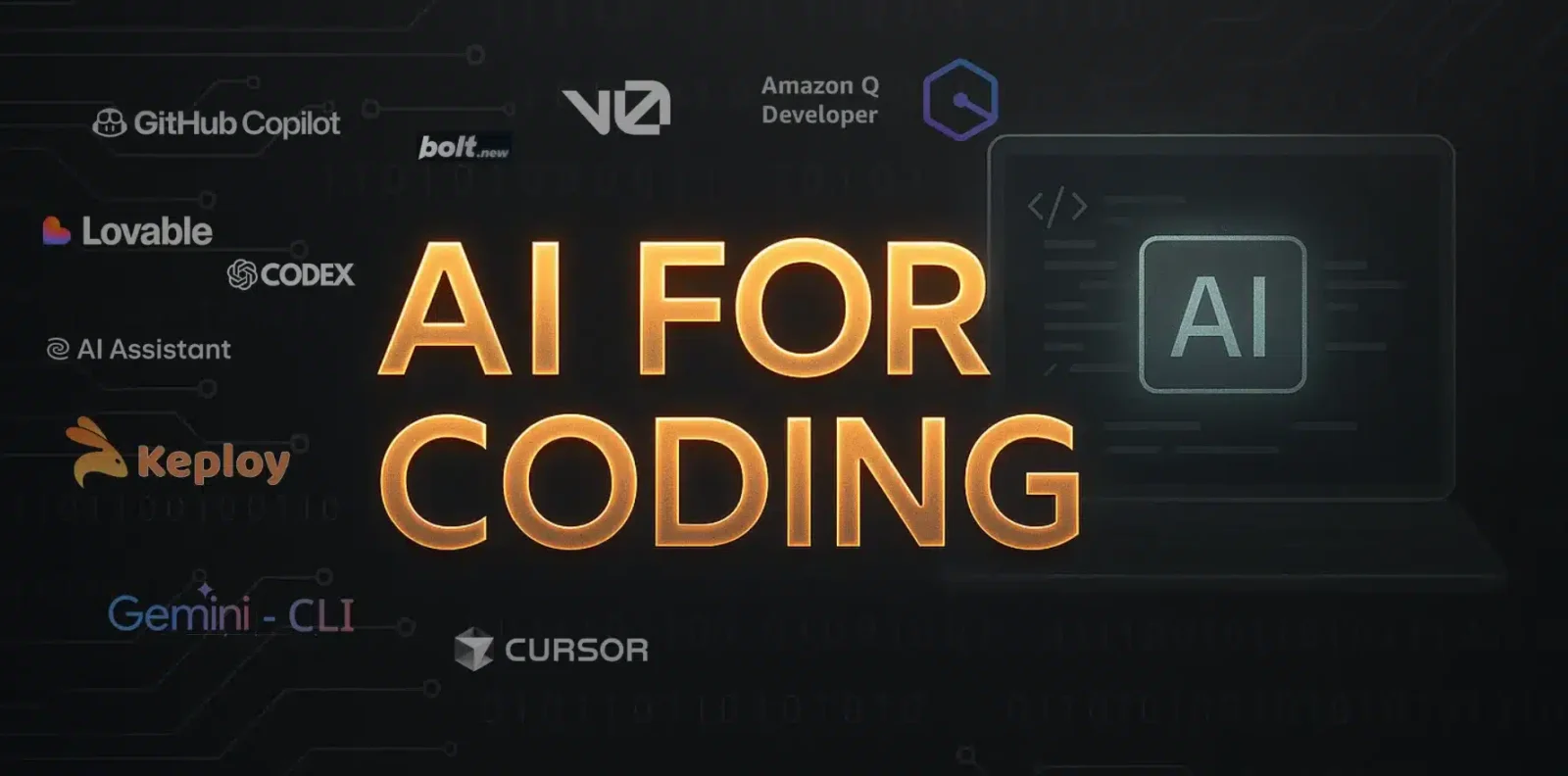
keploy.io
AI for Coding in 2025: Best Tools & Agents for Developers
Discover the 20 best AI coding assistants of 2025 , tested and reviewed to boost productivity, reduce errors, and accelerate development workflows.
-
Sorry, there were no replies found.
Log in to reply.